
Most of us at Hejmo live between languages. We carry vocabulary from different places, translate ourselves several times a day, and regularly find ourselves reaching for words that don't quite exist yet. So when we started thinking about what it means to name things, it never felt like an abstract exercise, it felt like a description of our ordinary Tuesday afternoons.
Living in the in-between
Living between languages means living somewhere between worlds. Our sense of home, linguistically speaking, is permanently under construction, and we become fluent in ambiguity (or try to!) long before we become fluent in anything else.
That can be tiring, and we won't pretend otherwise. But there's something else tucked inside it, too. If you're already standing slightly outside the system, already breaking the language a little every time you open your mouth, then you're also in a good position to notice where its edges are. And once you've noticed an edge, you can decide not to accept it, you stop being someone who receives a vocabulary and become someone who makes one.
This is what we wanted to explore in our writing workshop, In Between Languages, led by Alicia Morán.
A word that belongs to you
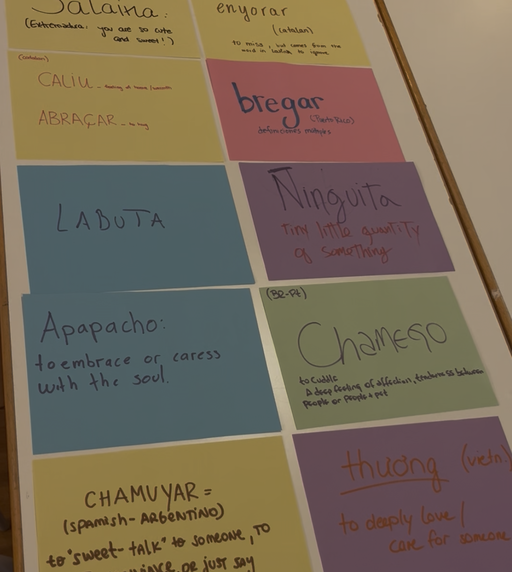
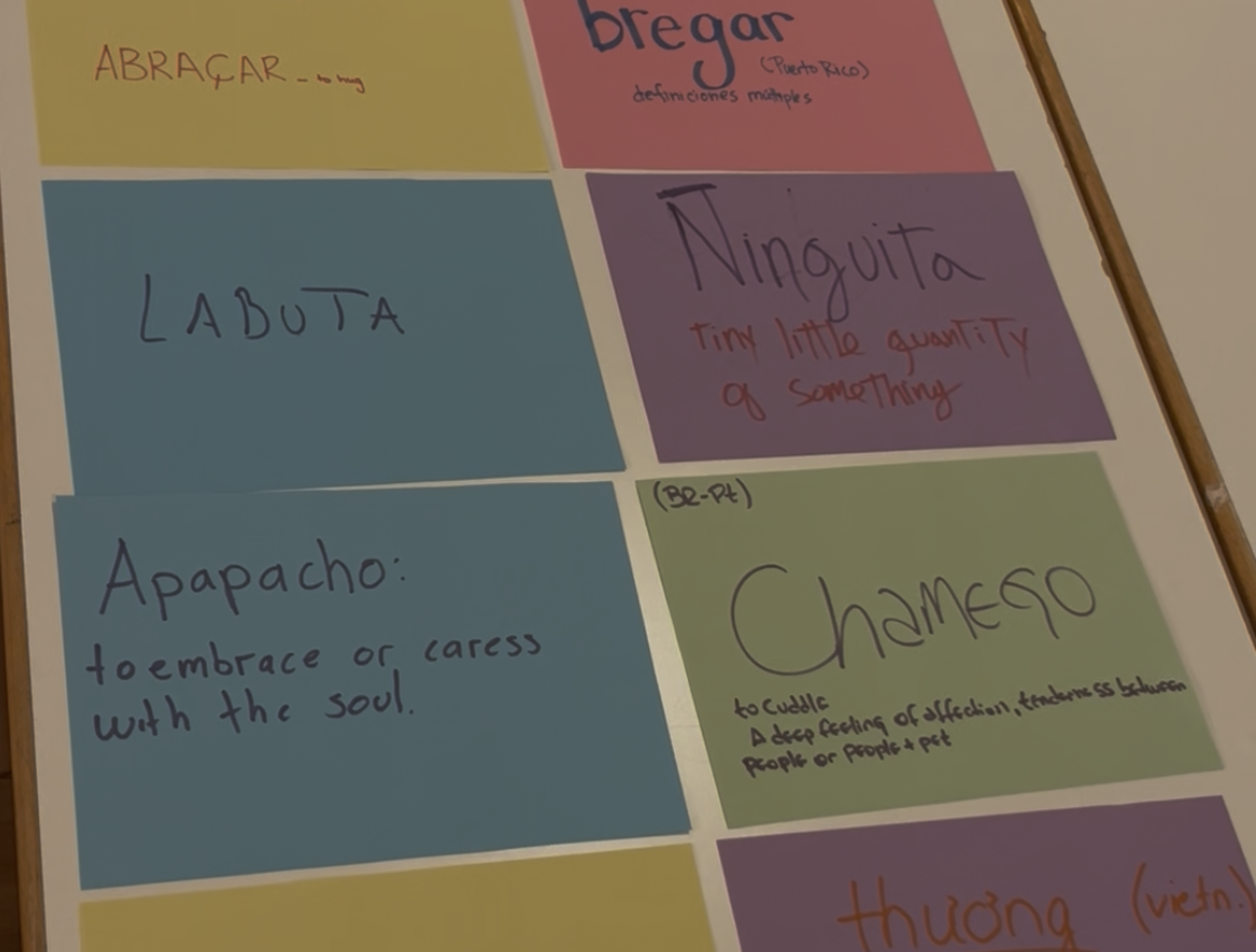
From Spanish, spanning Argentina, Puerto Rico and several regions of Spain, came chamuyar: to sweet-talk someone, to flirt or charm or persuade, or simply to say something lovely for the pleasure of saying it. Alongside it came salaina, from Extremadura, which roughly means you are so sweet, so cute. From Vietnamese we heard mến, to cherish someone dearly, and thương, a deeper and more enduring kind of care. From Catalan came caliu, the warmth of home, which originally described the glow left in embers. Portuguese brought chamego, that cuddly tenderness that lives between two people, or between a person and their pet. And there was apapacho, from the classical Nahuatl apapachoa, meaning literally to soften something with your fingers; a word now most often translated as an embrace given with the soul.
We noticed something almost immediately. Nobody had brought a word for anger, or ambition, or grief. Every single one of them was about warmth, closeness, care - which tells you something about what a room full of migrants in Berlin is quietly looking for.
Making new ones
Then came the real work: naming the things that don't have names yet. 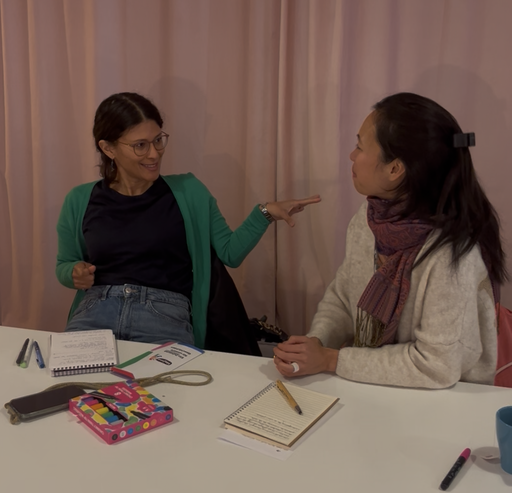
We started by looking at how words actually get built, which turns out to be less mysterious than it sounds: acronyms, compounds glued together in the very German fashion, roots borrowed from other languages, prefixes and suffixes doing their quiet work at either end. Then we let the creative juices flow.
The sun came up again and again, which will surprise nobody who has spent a February here. There was RATSU, from run after the sun, for the act of relocating yourself repeatedly through a room or a park to stay in the light. There was soligris, for the very specific gloom that arrives when darkness and solitude turn up together. And there was suneling, for going outside for no reason at all beyond the sun being out and it feeling wrong to waste it.
Then the city itself got its turn. Tazzz describes one of those Berlin days that feels accelerated and buzzing, humming at a frequency slightly above normal life. Berfreelin names the freedom of simply being here: wearing what you want, being who you are, and finding that nobody looks twice.
And inevitably, language. Lenmutterloss is the ache of missing the sound of your mother tongue. Imposayingmaking is the failure of a translated proverb, that particular small defeat of watching a saying die somewhere between two languages. And unterlesen is reading someone through their body rather than their words, because your vocabulary hasn't caught up with the conversation yet.
What we took from it
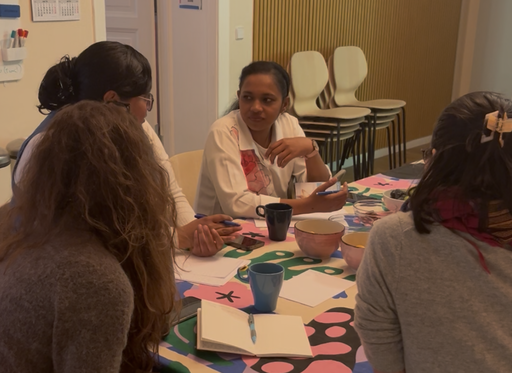
That's the real work that naming does. It takes a private experience and makes it shareable, turning I think there might be something wrong with me into ah, this has a name, and you have it too. And there's a further step beyond that: when you name your own experience, you stop waiting for someone else's vocabulary to make room for you. You become the author of your narrative rather than its translator. It's a small act, but it isn't a trivial one, especially when it happens in company, surrounded by people who are just as curious about how you see the world as you are about them.