
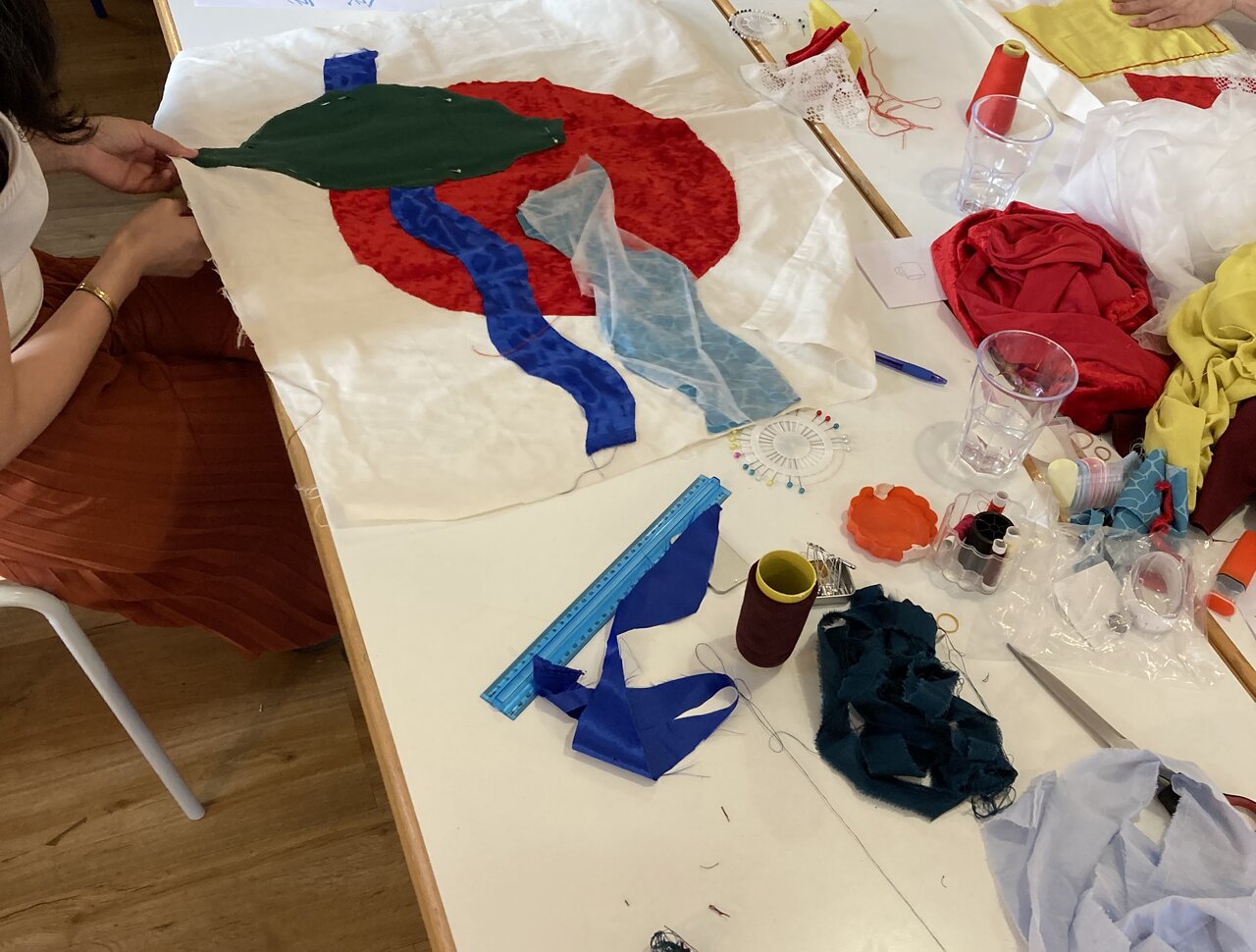
On one of Berlin’s exceptionally hot summer days, nine contributors joined Traces of Belonging, a textile workshop exploring how memories of home remain present through everyday gestures, stories, and acts of making. Together, we reflected on the ways connection is maintained: sharing a meal at the end of the day, bringing fresh bread for breakfast, or cleaning while dancing to Kurdish wedding songs, just as one’s mother once did. Through these small rituals, home revealed itself not only as a place left behind, but as something carried within us.
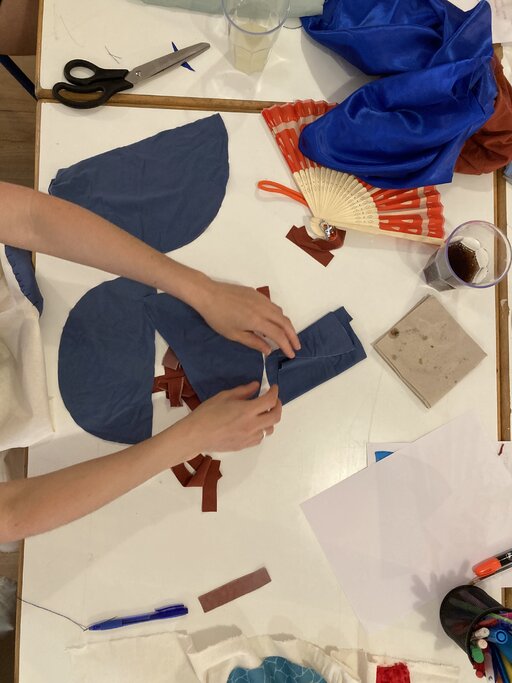
Growing up, I was surrounded by these textiles. What has stayed with me is not only their symbolic language, but the way they came into being. A Suzani emerged through many hands, with each person contributing something of themselves while becoming part of a shared whole. This collective way of making became the starting point for Traces of Belonging.
Rather than reproducing traditional motifs, I invited participants to develop their own visual language. The textile fragments became a way of holding personal histories, transforming memories, inherited customs, and everyday experiences into shapes, colours, and stitched forms. Some elements reflected traditions passed across generations, while others emerged from individual moments of care, change, and adaptation. These fragments transformed personal experiences into a shared visual language.
For me, sewing has always been inseparable from my mother’s story. Growing up in Tajikistan, we moved frequently, and wherever we settled she began sewing clothes for neighbours. Sewing was not only her profession but also a way of meeting people, building relationships, and creating a sense of home. 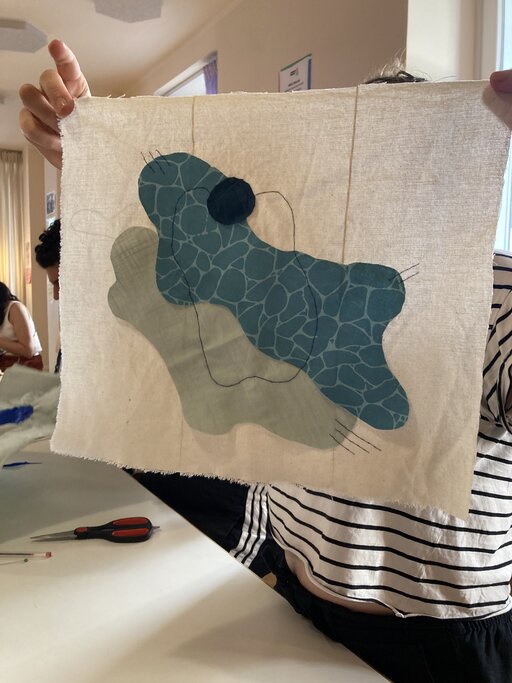
This was the first collective textile work I had initiated. I expected participants to bring different experiences, yet I was struck by how often they described home through ordinary acts of care rather than places. Working with our hands created a different kind of conversation. The slower rhythm of stitching allowed stories to emerge naturally, often through small memories that might otherwise have remained unspoken.
It was only while sitting in that circle that I realised I had inherited from my mother not only the skill of sewing, but a way of bringing people together. Looking back, I could see that this gesture had quietly become the foundation of my own artistic practice.
The individual textile fragments were later assembled into an installation that remains in the Blue House. Suspended above the seating area, it quietly accompanies moments of rest, conversation, and reflection. The work was created together with Baran, Beatriz, Hsiang-Jung, Katarzyna, Matheus, Ricarda, Salma, Şevval, and Veronica. Each fragment holds an individual story, yet when stitched together they form a collective composition where every contribution remains visible. Some threads were intentionally left unfinished, extending beyond the surface of the textile. They resist the idea of home as something fixed or complete, suggesting instead that it is continually negotiated, carried forward, and remade. 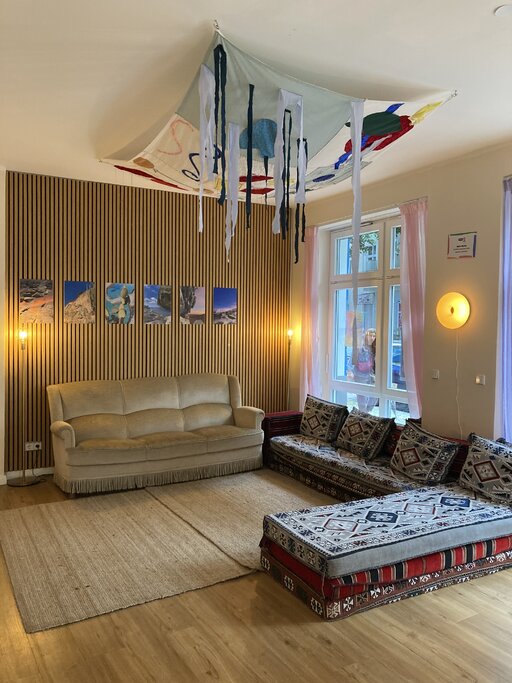
Leaving the work in the Blue House felt important because it allows these experiences to remain in a space where new encounters continue to unfold. Like the unfinished threads, the work extends beyond the workshop itself, inviting others to reflect on the gestures, memories, and acts of care through which we create and recreate a sense of home.