
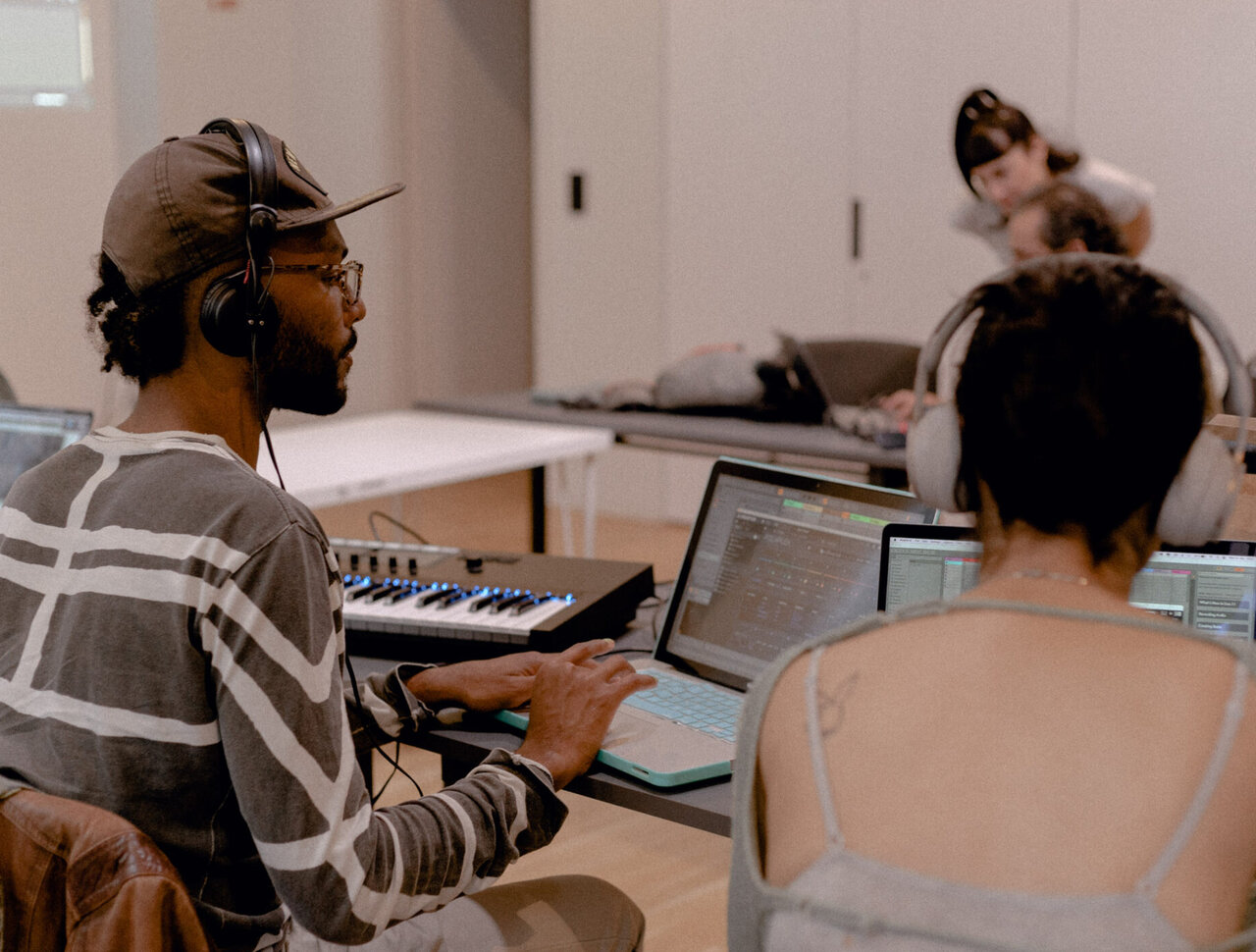
Launching our weekly DJ sessions at Open Music Lab in the summer of 2024 was a long-time dream of ours and soon became one of the Open Music Lab’s participants favourite activity. Today, we wanted to highlight the work of two of our dedicated volunteers, Filipe aka Organza, and Luca aka Luca Eck.
Can you tell me a bit about your journey with music, and electronic music specifically?
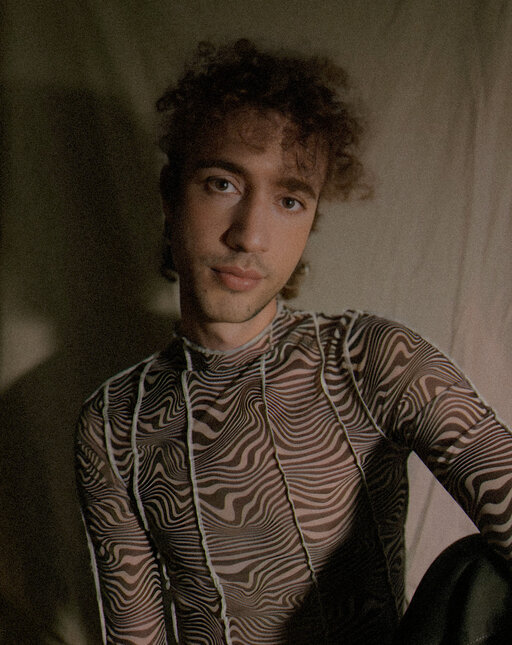
Filipe: I’ve been drawn to music and technology from a young age. When I was somewhere between 6-8 years old, I became obsessed with my dad’s stereo and his CD collection and would listen to it with his headphones any time I had a chance, and it always felt like a really special thing for me. Eventually I got a Discman, and once we all got regular, uninterrupted access to the internet and apps like Napster or Limewire came about, I immediately became obsessed with just discovering new artists, albums, or tracks. Around the same time (early 2000’s), I stumbled into a Portuguese magazine for electronic music (Dance Club) and this was game over for me. The big nerd in me was just dead curious to learn what this gear was all about, plus everything about the culture and the clubs just looked super appealing and interesting. I didn’t know what it was but I was set to discover it. The magazine would usually offer a CD with tracks by Portuguese artists and always had album reviews, so I just started digging and discovering the music by myself. At around 16 (20 years ago), I saved up and bought my first piece of kit – a rack-mounted double CD player (which was awful for DJing but I didn’t care so much), and the cheapest Reloop 2-channel mixer, and started learning how to DJ by myself. I eventually started going clubbing and discovering the (very humble but genuine) underground scene in Porto and shortly after moved to London to study, which also had a huge impact on my discovery journey. Since then, I’ve gone through many kit and format upgrades, and have gone from DJing House, to Jungle, Drum & Bass, Dubstep, Garage / 2-step, tech house, techno, and recently back to House. I can thank both my ADHD and the fact that there is just too much great music out there to always stick to the same subgenre for 20 years. Plus, I don’t really like to limit myself, especially artistically.
Luca: Music has been a constant thread throughout my life. I started classical training in double bass and piano at the age of five, which gave me a strong musical foundation. Around age eleven, I discovered electronic music—thanks to my parents’ collection of Eurodance and electronic pop records, artists like Cascada sparked something in me. A year later, I bought “Magix Music Maker Techno Edition” for 29 euros at Saturn and started experimenting with loops. I’d burn CDs and hand them out to my classmates. Not long after, I began DJing—my first gigs were at Antifa fundraisers in squatted houses in Kreuzberg and Mitte. That DIY spirit really shaped my approach early on.
You work professionally in the music industry, can you tell me about that, and how music developed from a passion to a career?
Filipe: Like most people who are doing the same, it hasn’t been an easy or linear path.
For many years I pretended to be professionally interested in areas or jobs that could be a bit more lucrative, only to eventually find myself wanting to work with music in some way. For a period of 6-7 years, I worked as a freelance live sound technician, which ended up killing my passion for it, as this was my sole source of income and I was always struggling to survive. My favorite gigs were always the ones in clubs, but this made up a small percentage of my work. Eventually I changed into English teaching for a few years and kept music as a hobby. 2020 was the hardest year ever for me, due to the pandemic and a lot of other personal issues. I was in my lowest point and lacking any inspiration to do music, and the pandemic did not allow me to
fix this. During a move to a new apartment, I made the conscious decision to keep all my music gear boxed and stored to the side. I didn’t really set a deadline with myself to bring it back out, I just knew that first, I had to get my life in order, and find my “groove” again. This hiatus lasted about 3 years and over the course of the last 2 years I’ve unboxed everything, sold some parts of my kit in order to upgrade, and slowly started building a little music station in my room again. During this time period I also came out as queer and have found a home in this pocket of the Berlin electronic music scene. Since then, my creativity and passion for electronic music has come back stronger than ever before and now I’m certain that, even if I don’t do it full-time, I will always try to be involved with electronic music and contributing to the scene in any way I can.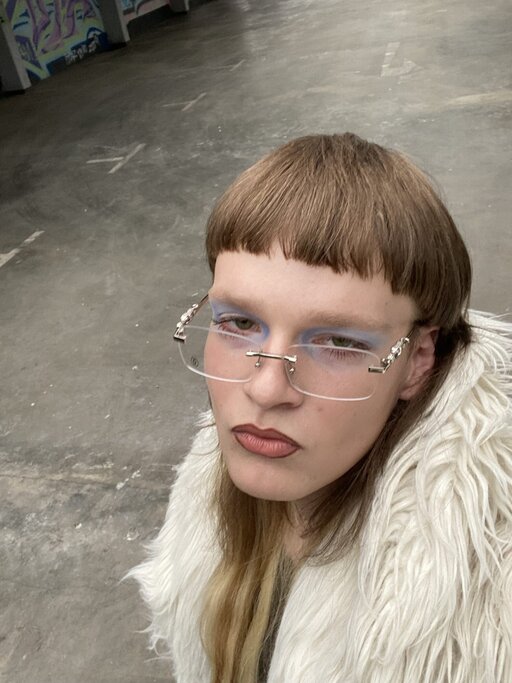
Luca: It happened gradually. My small “Soliparty” gigs began to draw a following, and with each event, the crowd grew. Eventually, promoters started to take notice and offered me bookings for larger raves and paid gigs. My first show at Tresor came when I was 17. By the next year, I was playing three to four shows a month, including some of my first international bookings, and releasing my own tracks—merging my love for electronic pop with techno. When the pandemic hit, touring paused, but surprisingly, my music gained traction online, racking up millions of streams. That momentum allowed me to relaunch my career stronger when the clubs reopened. I’ve now been developing my artist project professionally for over six years, and about a year ago I also started producing for other artists. I love the balance that brings—DJing can be intense, with lots of travel and sleepless nights, while studio work offers more stability and space to reflect creatively.
We’re really grateful that you’ve shared your time and skills with the Open Music Lab community through the DJ workshops. What drew you towards this type of volunteer work?
Filipe: There’s been many influences. Firstly, my previous job as a teacher made me realize that this is the perfect job for me and my personality. I love working with people, I’m a good communicator and love enabling skills, especially when it comes to DJing and production. For a few years I also worked in a shop in London selling DJ and studio equipment, and I honestly loved to see people’s faces just lighting up whenever you showed them how to do something they were struggling to do, or when they fully understood the possibilities that a specific piece of technology allowed them to do. The nerd in me knows this feeling first-hand, so it’s really great to be able to pass it on to other people. Finally, since I’ve started being more active in the Berlin queer scene over these past few years, I’ve seen just how supportive, kind, and helpful people can be. This gives me so much energy and love for it, and makes me want to offer something more. The feeling of community in Berlin is very strong, and makes the scene and events way more special and memorable, and I’m always happy to contribute to it.
Luca: Thank you—it really means a lot. The creative industries, and especially electronic music, are still heavily dominated by people from privileged backgrounds. Only about 8% of professional musicians in the UK are from working-class backgrounds, and that number has dropped by half since the 1970s. In electronic music, the statistics are even more stark—less than 10% of DJs are women, and under 5% of producers. That’s why I feel strongly about offering free, accessible workshops, particularly for the FLINTA* community. It’s a small but hopefully meaningful step towards making this industry more inclusive.
Is there something in particular that you like about the OML community?
Filipe: I’m so happy that places like this exist, especially in big cities like Berlin. It’s a wonderful community of people from all backgrounds, that ultimately all speak the same language. Everyone brings an open-mind, a friendly, humble attitude, and the willingness to learn from each other, show up for others, and grow. I haven’t been involved for so long but I’m really happy to be part of it.
Luca: Absolutely—I love the people. The Open Music Lab team is incredibly warm and welcoming, and the workshop participants are always super motivated and curious. I find it really inspiring to learn about everyone’s unique musical backgrounds and tastes. The diversity of perspectives makes every session feel fresh and collaborative.
You are involved in the queer music scene in Berlin. What do you think about the queer scene in Berlin, as opposed to other cities? What stands out here, or what do you feel is still missing?
Filipe: I was born in Porto and lived in London for a long time before coming to Berlin, but here is where I came out as queer, so my only real experience with it has been here. But Berlin is a city which is of course well-known for its queer scene, and it feels very close-knit and special. I should add that my perspective comes from the electronic music / events scene, so it’s limited to that, but I feel the sense of community is really strong here. A lot of promoters and organizers really make an effort and take their communities into consideration, and are always finding ways to create accessible, inclusive events, to lift the voices and talents of people from more marginalized communities, and also educating others how to do the same. Recently there’s been more initiatives and events from certain collectives, such as Lunchbox Candy or Body Language for example, that encourage gathering in a sober setting, either for dancing, or hanging out, with workshops and music, and I think this is something which is very needed in a city known for its indulgent, hedonistic culture.
It’s an important talk to have, as well as transparent discussions around the impact of nightlife and clubbing on mental and physical health. It can be a beautiful thing to do but for me it’s important to normalize talking about these things in order to help keep it a sustainable practice.
Luca: Berlin’s queer scene is vibrant and multifaceted—there’s an incredible abundance of events, collectives, and creative energy. Compared to other cities, I’d say Berlin’s scene sometimes leans a bit too hard into its seriousness. I’d love to see more spaces where people feel free to let loose, experiment, and just have fun without fear of being judged. Joy and playfulness are political too.