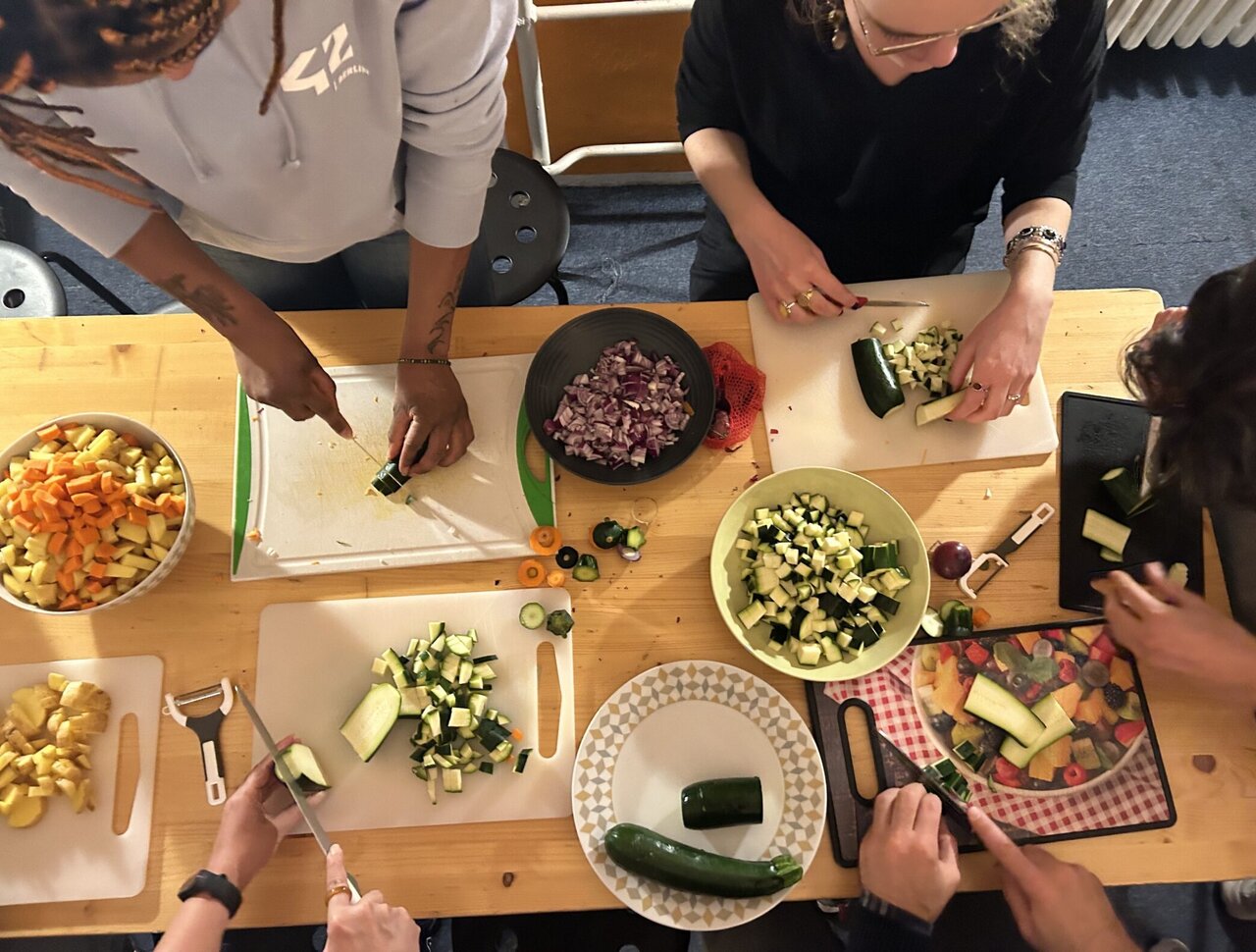
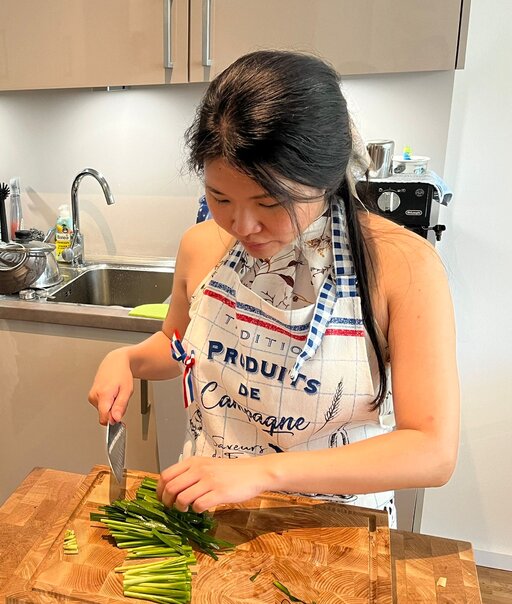
Last month, Ceci joined us at the Open Kitchen for a Hong Kong-themed social cooking session. We couldn’t pass up the chance to learn some insider tips and hear the fascinating stories behind the recipes she brought to our kitchen!
Can you introduce yourself briefly? I’m Ceci currently living in Berlin & native to Hong Kong 🙂 I’m blessed enough to have the chance to live in various countries – Japan, the UK & Germany – to experience different cultures and learn so much from all of it. As I also speak Japanese and have worked for the Japanese most of my career, which has injected a certain degree of Japanese culture into my bloodstream.
When did you start cooking and how did you learn to cook? I started cooking at the age of 15 due to family obligations. My dad taught me all the basic cooking skills in Cantonese cuisines. After acquiring all the basic skills, I started doing lots of self-teaching while living abroad where all my comfort foods are very hard to find.
What do you bring from your home country to your cooking? I am thankful that I only needed to bring my cooking skills with me, because the UK and Germany both have quite an adequate supply of Chinese cuisine groceries. My parents however always ask me to bring some Chinese dried herbs which are used in Chinese medicine or have certain benefits to health.
Can you introduce us to the recipe that you cooked?
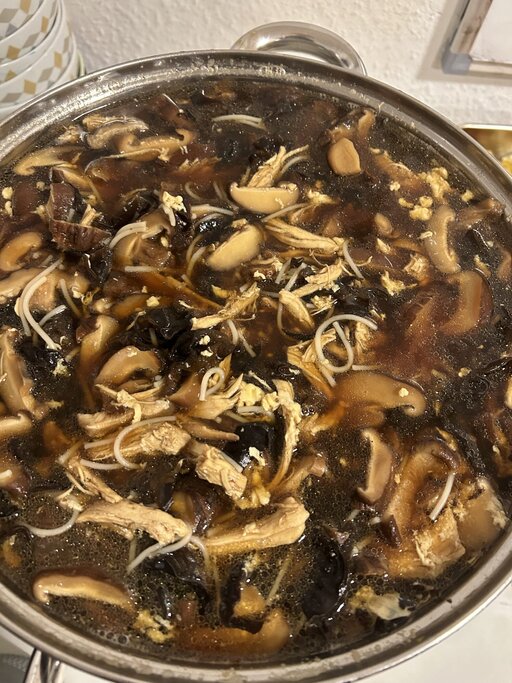
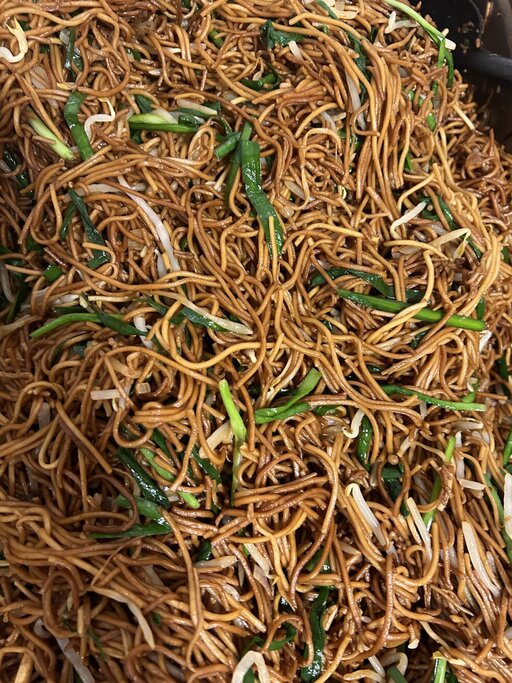
Yes sure! Let’s start with the soup – 1. Wun Zai Ci – it is an all time locals’ favourite street food in Hong Kong, as soups are one of the heart of Cantonese cuisines. Wun Zai Ci is said to be a much more affordable version of real shark fin ones that was created by hawkers back in 1940-1950 at Kowloon Yau Ma Tei area in Hong Kong. The hawkers used glass noodles to substitute the shark fins as the taste of the dish tastes quite the same, it then turned into a great hit among the regular citizens and lasts till today. 2. Baked Portuguese Coconut Chicken Rice – The dish has actually nothing to do with Portugal but a historic Macau dish. As HK and Macau are geographically close to each other, HK’s food culture was influenced by it at a certain degree. This dish is 1 of the products that derived from it and being added to Hong Kong Pizza Hut’s menu. Of course also easy to be found in Cha Caan Teng (HK fast food restaurants). 3. Hong Kong Fried Noodles – It is a simple fried noodles dish being served in most of the restaurants across Hong Kong. There is unfortunately not too much background info for this dish. The dish is made with simple ingredients and Hong Kong locals love having it as breakfast.
Why did you choose this recipe? Why is it important to you? All these 3 recipes are what I grew up with , and it would take some time for tourists to finally give those dishes a chance to try them out as they would have to go through all the most well-known dishes first, and like the cuisine enough to decide to dive deeper for other local foods. That is why to me it is such a valuable opportunity to promote all those only-local-knows food to the public.
How do you use cooking to connect with your community or fellow migrants in your new home? I host party about once a month to share my cookings with my fellow migrants, they just eat whatever I cook, and my menus change upon my own cravings and the party themes :))
How has living in a new country influenced your culinary identity? Do you find yourself blending different cuisines? I would say it rather gave a clear vision on my cooking styles – stay true to the foods’ original tastes. As the foods on the streets are already very well blended 😉 I wish the public could also know the foods’ actual tastes 🙂
Do you have a dream you would like to realize? Yes, my new dream is have my own restaurant opened and hopefully it would not take too long for it to come true :))
Hong Kong Fried Noodles
25 portions
300 g egg noodles 1 shallots 1 bunch chinese chives 1 handful bean sprouts 3 tsp light soy sauce 3 tbsp dark soy sauce 3 tbsp oyster sauce
Boil a pot of water enough to cook the noodles. Once the water is boiled, turn off the heat and put all the noodles into it and soak it for 3 mins until they can be separated. Separate all the noodles and drain the water, let the noodles dry for 15-20 mins. Make sure the container for the noodles has holes and place it in a well-ventilated position. Mix 3 tbsp dark soy sauce, 3 tbsp oyster sauce, 3 tsp light soy sauce and some sugar Heat a pan with oil, cook shallots until it releases its smell, then add chives & bean sprout, stir fry them for a few mins, take them out of the pan and set aside for later use. Add noodles and let it sit for a minute, then flip it to the other side for the same. Start adding the sauce mixture to the noodles bit by bit, until all noodles are coated with the sauce, easier to achieve with a pair of chopsticks while cooking. Add the chives & bean sprout to the noodles and mix it well with noodles.
Our wellbeing and community initiatives like this are generously supported by a Here to Be Grant from the Lululemon Centre of Social Impact.