
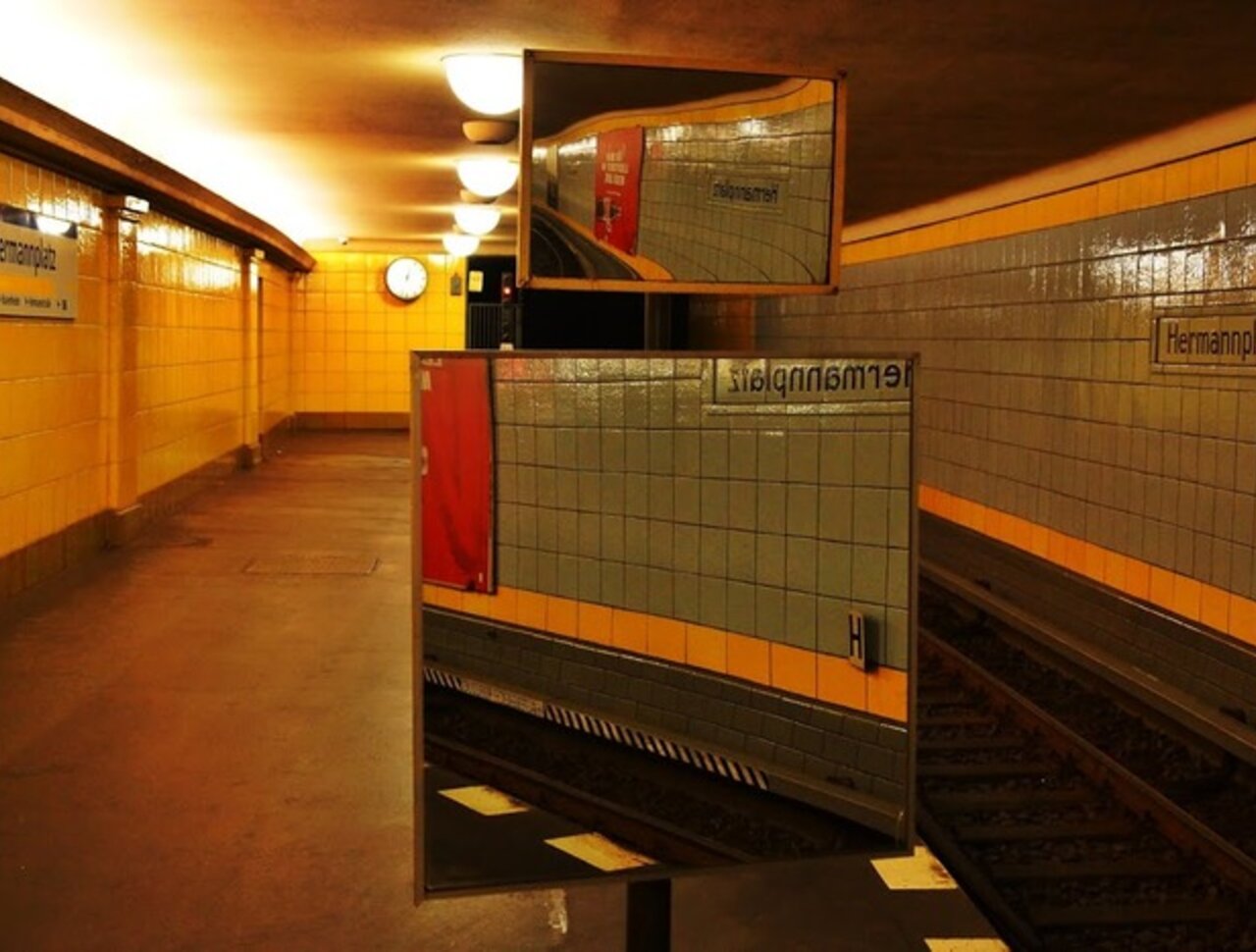
In Berlin they are especially visible on the U-Bahn. They wait for the subway doors to close before they address the car with a rehearsed speech: “Excuse the interruption, I am one of Berlin’s annoying homeless people…”. That’s how it usually begins, as they peddle newspapers and scan the crowd for an outstretched hand holding change or food.
The majority of us keep our hands tucked away or firmly gripping our phones. Some of us fall into convenient bouts of exhaustion, promptly leaning back and closing our eyes. In this moment, we are restricted to a moving car, a shared space. We can’t dodge a corner or cross the street, but we still find ways to make them invisible. We don’t look up because we feel uncomfortable. We become frustrated at them for making us feel this way. We may even become angry – at them, at society, at ourselves.
How the simple presence of one person can incite so much emotion, judgment and shame.
How it must feel to be simultaneously so visible and invisible.
“It’s one of the worst things for homeless people, being treated as invisible. Answer them when they speak to you, make eye contact, acknowledge them!” our guide Carsten Voss urges us by the end of our walk. We are wrapping up a tour called “Obdachslose zeigen ihr Berlin” (The homeless present their Berlin), run by non-profit organization Querstadtein. The group offers tours in Schöneberg and Mitte that show the reality of homelessness in the city.
Our guide speaks from personal experience. Decked out in designer glasses and a well-fitting sweater, it’s challenging to picture this man as the subject of the powerful story he delivers in front of stately Viktoria-Luise-Platz. Carsten worked 80+ hours a week as a manager of an international tradeshow before burning-out and falling into depression. First came the loss of his job, then his apartment. He refused help from loved ones, other than taking refuge in a friend’s shed for a few months. It would be a year before he clawed his way back out. He cites one defining moment: “I happened to glance into someone’s window from the street. The woman was cooking and the man was watching Tagesschau on TV… I realised that if I didn’t make a change then, I would never have that again.”
That year Carsten was counted among Berlin’s estimated 4,000 Obdachslose (literally translates to “without shelter”). Not to be confused with Wohnungslose (“house-less”), which refers to those without homes but still in the system, Obdachslose are no longer in the system and may or may not have a place to sleep. Berlin has Germany’s highest concentration of Obdachslose, both from within and outside of the country.
There are three main categories of Obdachslose in Berlin, Carsten explains early on in the tour: “Former refugees from East Germany, those groups of young people who usually have dogs with them and immigrants.”
Migrant homelessness throughout the EU has risen in recent years, exacerbated by the economic crisis. This may come as no great surprise, though it’s a blow to hear that many in Berlin “end up staying because they find the conditions of being homeless here better than their lives back home”. Carsten describes this group in three geographic waves: the first from Poland, the second from the Baltics and the third from Bulgaria and Romania. “Of course they came here planning to find jobs, start families, create a life. Some make it, but many don’t.”
Berlin has a long tradition of homelessness. It’s a poor city – Germany’s poorest – but also equipped with robust social services. Berlin has a history of attracting those who are “different”, including many immigrants, due to its diversity and tolerant atmosphere. During the days of the Berlin Wall, it was also a haven for males escaping military conscription (which ended altogether in 2011). Carsten moved to Berlin for this reason, and says he and many others like him entered fields like social work and education. This, he claims, has contributed to the city’s liberal nature and strong social net.
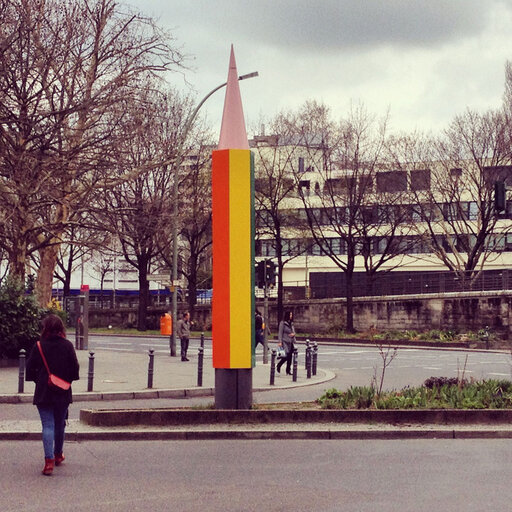
Berlin’s homeless tend to cluster in Schöneberg and Charlottenburg, two districts in West Berlin now more associated with high rents and old West Berlin charm than alternative lifestyles. Carsten guides us to Nollendorfplatz, Berlin’s LGBT hub and site of the annual pride parade, Christopher Street Day. We stand across from the colorful Regenbogen-Stele, a rainbow column erected in 2000 to celebrate the area’s high concentration of homosexual residents and open-minded atmosphere. The statue itself carries two symbols: the rainbow flag for gay pride and the Rosa Winkel, a pink badge first used by Nazis to distinguish homosexuals in concentration camps, and what later became an international symbol for gay rights.
As we inspect the square, Carsten points out what our untrained eyes fail to see: a 24-hour grocery store well-equipped with bottle deposit machines, a van selling the street newspaper, a well-lit intersection. “Homeless people are part of this neighborhood, they have a community here,” he says.
Another faction of the city’s homeless blend in so well that we don’t see them at all: “Most people have an image in mind of the bag lady (or guy), unkempt and dirty, pushing around a cart filled to the brim with random items, muttering crazy things to themselves... most homeless people don’t look or act like that.” Carsten estimates that 60 percent fall into this category, homeless people who look “normal enough” that they can use spaces and services within the city without getting noticed. They schedule their day in such a way that they always have a place to be, something to eat, even a bed to sleep in. They know when the citizens’ office opens where they can grab a shower, when they can rest in the library or supermarket, who is offering a free lunch or haircut in the city. “It’s an exhausting life, they have to be very organized, and they are constantly in public,” Carsten emphasizes. “Often the only time they have to themselves is in the shower.”
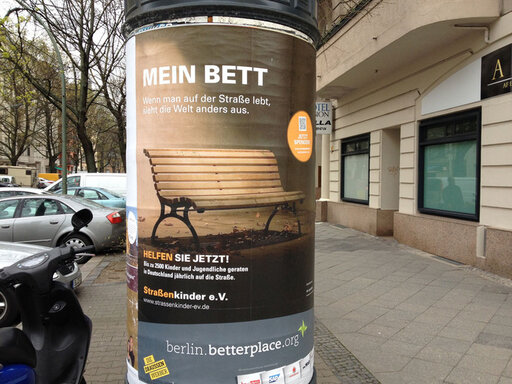
Carsten’s happy ending is a welcome take-away from an otherwise harrowing topic, but he warns against the assumption that all homeless people are unhappy or need to be saved. While many do suffer from mental illness and drug and alcohol abuse, others have deliberately chosen this lifestyle. “Some people want to live this way, and we have to respect that. We have to recognize them as part of society.”
It’s easy to dodge corners and cross streets, to switch subway cars to avoid someone’s stench or words, to grip our phones and look down.
It’s not as easy to look up.
Sophia Burton is a founder of Collidoscope Berlin, where this article was first published. For more on the Collidoscope philosophy regarding borders and belonging, read the Collidoscope Manifesto on cities, difference, and building community.
The Querstadtein homeless tours (in German) currently take place in Charlottenburg and Mitte, usually on Sundays and for approximately 2 hours. Tickets cost €13,00 or €6,50 for students, seniors, and individuals on welfare. More information can be found on their website.
PEGACPBA71V1
MB2-707
70-483
350-029
350-060
2V0-621D
70-410
9L0-012
70-246
2V0-621
000-104
640-916
000-089
200-355
000-105
JN0-360
642-732
300-101
74-678
1Y0-201
300-135
AWS-SYSOPS
AWS-SYSOPS
N10-006
810-403
LX0-103
70-178
CCA-500
220-901
350-001
9L0-012
210-260
70-177
ITILFND
300-209
2V0-620
220-902
NSE4
400-051
1Y0-201
350-080
70-488
70-246
MB5-705
210-060
000-080
400-201
300-208
1V0-601
220-801
NSE4
640-911
642-999
100-101
1Z0-051
HP0-S42
640-911